
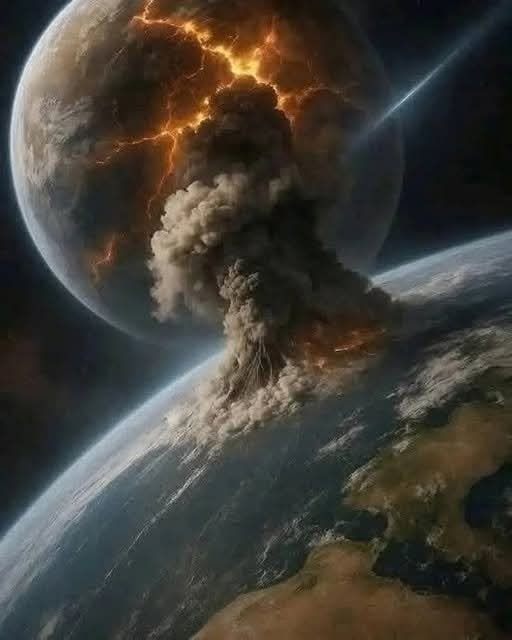
At first, it sounded like just another routine update from astronomers—a distant object passing through our cosmic neighborhood. No alarms, no urgency, just another entry in a long list of tracked space rocks.
But then the details came out.
The object, known as 52768 (1998 OR2), is not small. Estimates place it somewhere between 1.5 and 4 kilometers wide—large enough to change the course of human history if it were ever to strike Earth.
Suddenly, what seemed like background space news felt a little closer to home.
 What Makes This Asteroid Significant
Asteroids of this size fall into a rare and serious category. They are not extinction-level like the one that wiped out the dinosaurs, but they are still powerful enough to cause:
- Massive regional destruction
- Global climate disruption
- Tsunamis if impacting oceans
- Long-term ecological damage
Traveling at roughly 8.7 kilometers per second, this asteroid carries enormous kinetic energy. If it were on a collision course, the consequences would be severe.
But here’s the key point:
 It is not.
 Why Scientists Say There’s No Danger
Organizations like NASA have been tracking this asteroid for years with high precision.
Their conclusion is consistent and clear:
- The asteroid will pass Earth safely
- There is no impact trajectory
- The closest approach distance is well within safe margins
Its flyby on June 2nd is considered a “close approach” in astronomical terms, but still millions of kilometers away—far beyond any realistic threat.
So why does it still feel unsettling?
 The Deeper Concern: What This Reveals
Events like this don’t scare scientists—but they do remind them of something important:
Our safety depends on detection and preparation.
We are only safe because:
- We saw it early
- We calculated its path
- We confirmed it will miss
That system works—but it’s not perfect.
 Are We Ready for a Real Threat?
Humanity’s defense against asteroids is still evolving.
There are systems in place:
- Global tracking networks
- Space telescopes scanning the sky
- Early-stage deflection technologies
NASA even tested asteroid deflection with the DART mission, proving that changing an asteroid’s path is possible.
But there are limits.
If a dangerous object were discovered too late—months instead of years—the options would shrink dramatically.
And that’s the real concern.
 A Thin Safety Margin
Our planetary defense relies on:
- Constant observation
- International cooperation
- Funding and political support
These systems must work together flawlessly. Even small delays or missed detections could make a huge difference.
Because in space, timing is everything.
 Not Fear—But Awareness
This asteroid is not a threat.
But it is a reminder.
A reminder that Earth exists in a dynamic, sometimes unpredictable cosmic environment. Most of the time, we are safe—not by luck, but by science, vigilance, and continuous monitoring.
Still, the question remains:
What about the one we don’t see in time?
 Final Thought
52768 (1998 OR2) will pass by harmlessly. Scientists will track it, record it, and move on.
But its presence highlights something bigger than itself.
Our planet is protected—but not invulnerable.
And the real story isn’t about this asteroid.
It’s about the next one.
The one that tests not just our technology—but our readiness.