
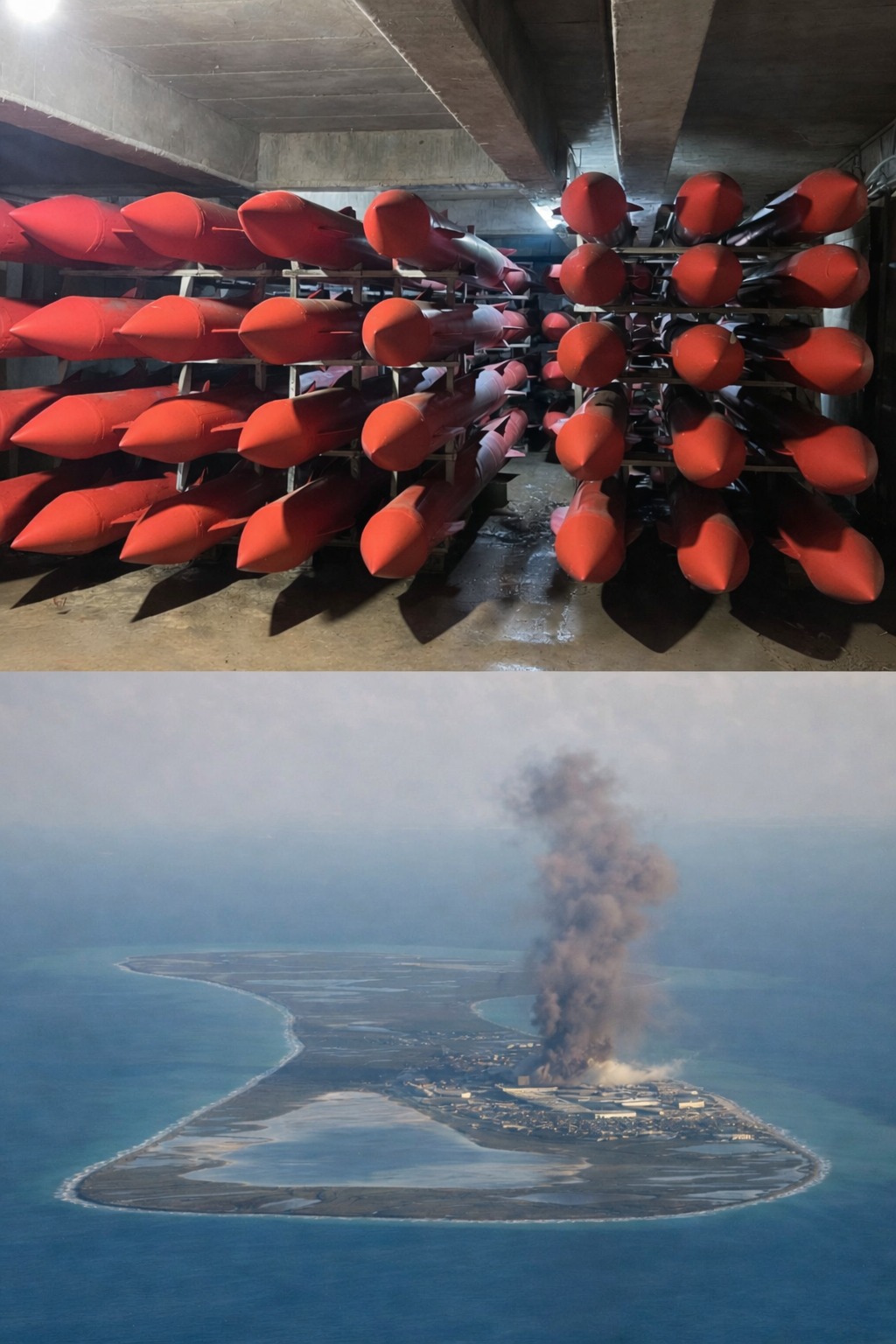
Recent claims suggesting that Iran launched a modified Khorramshahr missile toward Diego Garcia have generated concern and confusion. The idea of a missile traveling nearly 4,000 kilometers—far beyond Iran’s officially stated range—sounds alarming. However, it is important to separate what is confirmed from what is speculative.
First, there is currently no credible, verified evidence that such a strike has actually taken place. Neither the United States nor the United Kingdom—both of whom operate military facilities at Diego Garcia—have reported or confirmed any missile attack. In today’s world, an event of this magnitude would almost certainly be detected and publicly acknowledged due to advanced satellite systems, radar tracking, and global intelligence networks.
So why are these claims gaining attention?
Part of the reason lies in the technical possibility behind them. The Khorramshahr missile is known to carry a relatively heavy payload. In missile engineering, range is often linked to weight. By reducing the weight of the warhead, it is theoretically possible to extend the distance a missile can travel. This has led some analysts to speculate that Iran could develop longer-range capabilities than it publicly declares.
However, theoretical capability does not equal proven reality. There has been no confirmed operational use of an Iranian missile reaching distances close to 4,000 kilometers in combat conditions. Military capabilities are typically demonstrated through testing, observation, and verification—and such a leap in range would not go unnoticed by global defense communities.
Another factor contributing to the spread of these claims is the role of information warfare. In modern geopolitical tensions, narratives can spread rapidly through social media, sometimes faster than facts can be verified. Claims about advanced weapons or unexpected capabilities can be used to influence perception, create fear, or signal strength—even if they are not fully accurate.
This is why caution is essential.
Even though there is no confirmed strike, the broader concern about missile capabilities is not entirely unfounded. Countries in the region—and beyond—closely monitor developments in missile technology because of their potential impact on security. If Iran were to demonstrate significantly extended range in the future, it would indeed raise strategic concerns for nations across the Middle East, South Asia, and parts of the Indian Ocean region.
Still, it’s important to keep the current situation in perspective.
At this moment:
- There is no verified attack on Diego Garcia
- There is no confirmed combat use of a 4,000 km Iranian missile
- The claims remain unproven and speculative
Fear often comes from uncertainty, and in cases like this, uncertainty is high because information is incomplete or unverified. That’s why analysts, governments, and media organizations rely on multiple sources before confirming such serious developments.
If an event of this scale had truly occurred, it would not remain hidden. It would trigger:
- Immediate international response
- Emergency military alerts
- Widespread, consistent reporting across major global outlets
None of that has happened so far.
In conclusion, while discussions about missile range and military capability are valid and important, the specific claim about Iran striking Diego Garcia should be viewed with skepticism until confirmed by reliable sources. It is always better to rely on verified information rather than reacting to early or unconfirmed reports—especially when the topic involves global security.
Staying informed is important, but staying accurately informed is even more critical.